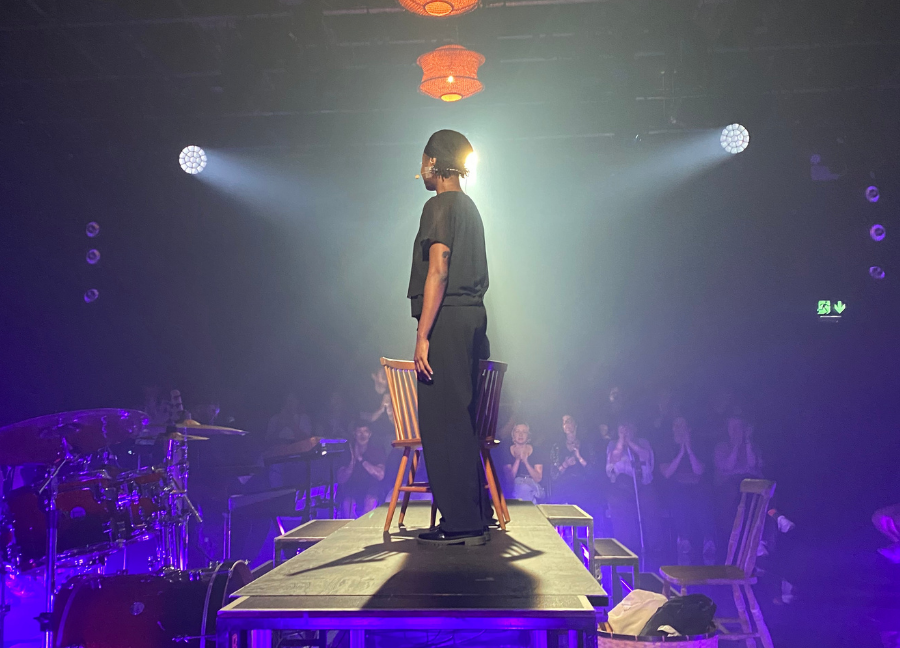

This past September, I had the honour of being selected by the Canadian Association for the Performing Arts (CAPACOA) as part of a small Canadian delegation to attend the Dublin Fringe Festival. Fully funded by CAPACOA, the trip provided an opportunity to experience a diverse range of theatre performances while exploring possibilities for Irish artists to tour across Canada in 2027 as part of the Canada-Ireland 180 initiative.
In 1847, over 100,000 Irish people migrated to Canada because of the Great Famine, leaving their homes and lives behind in the hopes of a better life. Since then, Irish Canadians have been an integral part of Canada’s culture. In celebration of the two countries’ relationship, the Canada-Ireland 180 initiative proposes to commemorate and strengthen the bonds between the two countries through the promotion of cultural exchanges.
A City Steeped in Literature
After a single morning of exploring Dublin, it became immediately clear to me how steeped the city is in great literature. The presence of James Joyce, Oscar Wilde, Yeats, and Beckett seemed to linger in the cafés, pubs, and alleys of Dublin. Or perhaps it was just that our networking sessions were held in the James Joyce Room at the iconic Bewley’s Café, adorned with stained-glass windows by the renowned artist Harry Clarke and known as a hangout for many of Dublin’s renowned artists.
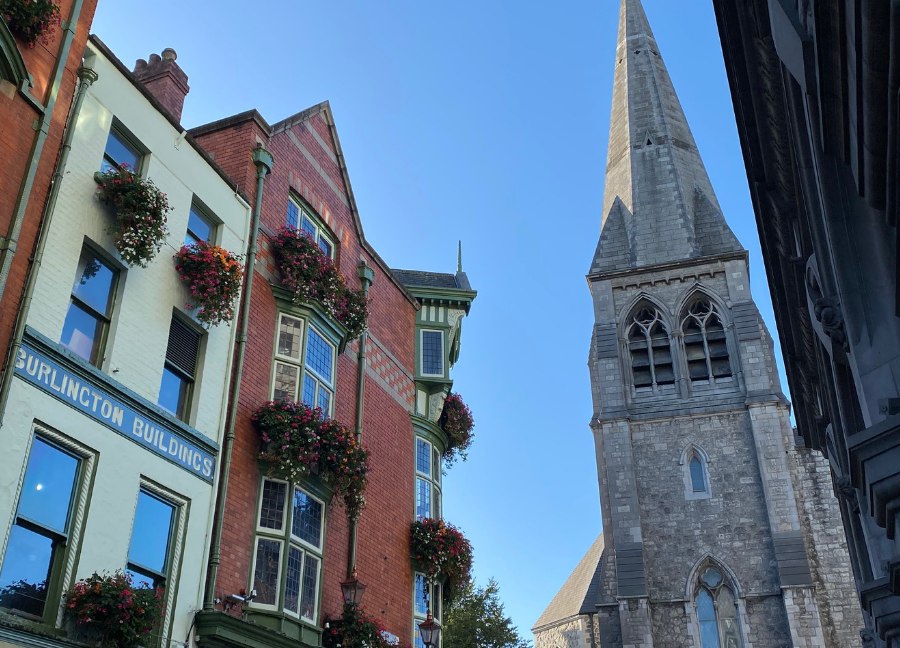
Ireland’s culture of literary excellence extended to much of the writing in the Fringe shows. Even in the rare instances when a show did not ultimately succeed, the quality of writing was, nonetheless, highly compelling. Fortunately for me, the majority of the shows were well-written, well-acted, and well-executed.
The shows were thematically varied, with topics such as crisis acting, the nature of play, living with chronic pain, Kafkaesque absurdity (for kids!), tradwives, gender, and climate change, among many others. In terms of format, shows ranged from narrative-driven plays to experimental performances based on audience participation. I even attended a show where I, as a lone audience member, became a performer for a tree.
The playwrights featured at the Fringe combined diverse theatrical elements and multiple genres, sometimes simply subverting expectations in novel and interesting ways.
Exploring Dublin's History
Aside from the lineup of shows, I was able to visit places like the National Gallery of Ireland (the J. B. Yeats Room was exceptional!), the Irish Museum of Modern Art, Christchurch and St. Patrick’s cathedrals, multiple small galleries, and Kilmainham Gaol, the famous prison opened in 1796 and known for holding and executing many Irish leaders who fought for independence from Britain.
While touring Kilmainham Gaol and hearing about Irish history, I learned that every detail of the prison was designed to enforce submission: narrow hallways ensured prisoners remained in single file, short doorways required inmates to crouch in a vulnerable position to proceed, and the panoptic design of the newest wing ensured that all inmates, whose cells were on the perimeter of the building, could be seen at all times by a guard in the centre.
As French philosopher Michel Foucault observed, this design also exerted invisible control, causing inmates to regulate their own behaviour because, even if a guard was not actively watching them, they knew that at any moment a guard could be watching. This was a place of control, dominance, and force, more often than not exercised toward unjust ends.
The Soft Power of the Arts
The force and hard power historically used at Kilmainham Gaol were a striking contrast to what I otherwise experienced at the Fringe Festival and in Dublin’s art galleries: freedom, creativity, expression, inspiration, intellectual provocation, and seduction; in short, soft power.
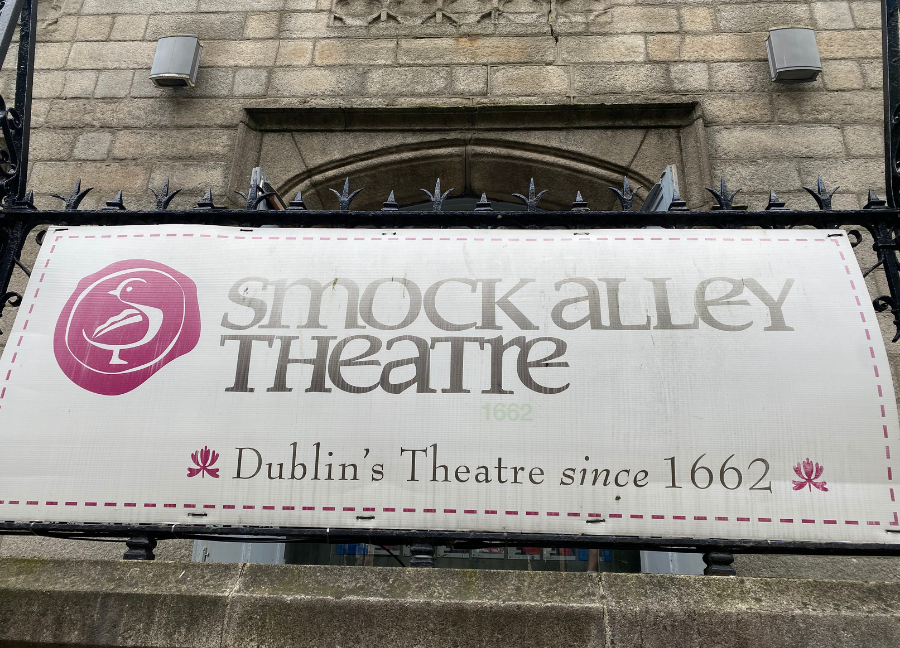
The show Rolling! (Mónica Muñoz Dance) explored play through movement and sound. A Recurrence delved into the stories and difficult choices of women across three generations through touching, compelling acting. Under the guise of a reality TV show, Daddy Issues (Brigid Leahy/LemonSoap Productions) examined the tradwife fad in both the U.S. and Ireland.
Crisis Actor (Eoghan Carrick/Lauren Jones), a show that was equally humorous and tense, raised an uncomfortable question: how do you live when you indirectly benefit from the trauma of others? Exhibit A: Imposter (Justine Megan) used humour to illuminate class differences in Ireland.
These and many of the other shows engaged audiences, focusing perception, opening minds, challenging perspectives, and, at times, inspiring action through storytelling, movement, and play. With theatre venues as meeting grounds, artists and audiences gathered in curiosity and joy to mutually influence and inspire each other. This is what soft power looks like.
My time in Dublin experiencing the Fringe Festival and many of the city’s cultural sites was a true joy, and I feel fortunate to play a small role in Canada’s efforts to strengthen its relationship with Ireland.
In a world that is experiencing excessive use of hard power, we need the soft power of the arts more than ever to strengthen bonds and nurture both diplomacy and the generosity of spirit that humans and nations thrive on.
I am thrilled to have served as a Canadian delegate to Ireland, and I’m excited to see what shows we get to bring to our Mary Irwin Theatre for our 2027–2028 performing arts season to share with the Kelowna community. Thank you to the Canadian Association for the Performing Arts (CAPACOA) for funding my time at the Dublin Fringe.
In the meantime, check out the many amazing shows in the current RCA Presents season, including the award-winning Taiwanese dance company HUNG Dance; Caribbean-jazz powerhouse CaneFire; and BC’s own WONDERHEADS and their performance of The Wilds.
About the Author
Andrew Stauffer is the Theatre Programming Director and Gallery Curator at the Rotary Centre for the Arts in Kelowna, BC. He oversees the RCA Presents performing arts season, bringing diverse local, national, and international performances to the Mary Irwin Theatre. In October 2026, Andrew was named Presenter of the Year by the BC Live Performance Network, recognizing his contributions to live performance presenting in British Columbia.